
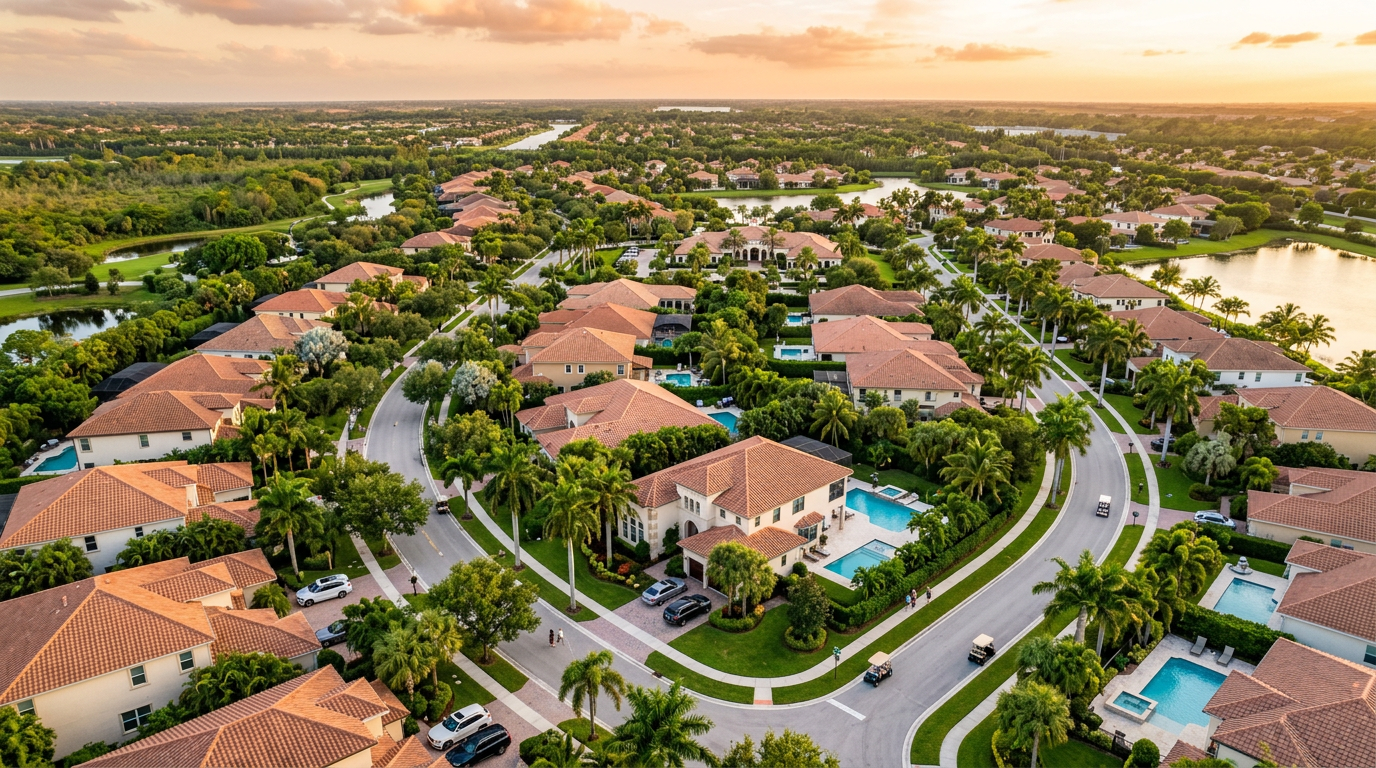
First, if you are researching Parkland homeowners insurance as part of your home-buying journey, you are asking the right question — because buying a home in Parkland, Florida means factoring in costs that go well beyond the listing price. Homeowners insurance, therefore, is often the single largest variable cost buyers overlook.
South Florida’s insurance market has shifted dramatically, and Parkland is no exception. Furthermore, premiums in Broward County now average $5,500 to $8,000+ per year, and in some cases they can rival a second mortgage payment. Moreover, understanding how Parkland homeowners insurance works — and which neighborhoods carry hidden financial advantages — can save you thousands of dollars every year.
In this guide, accordingly, we break down Parkland homeowners insurance by neighborhood, explain how wind mitigation inspections slash premiums, and give you a practical checklist of what to ask about insurance before you make an offer.
Why Parkland Homeowners Insurance Matters More Than You Think
First, when you calculate your monthly housing budget, you probably factor in mortgage principal, interest, taxes, and HOA fees. However, insurance is often the largest variable cost in that equation — and it varies wildly based on:
- The age of the home (post-2002 Florida Building Code homes cost significantly less to insure)
- The roof type and age (hip roofs and newer roofs earn the biggest discounts)
- The construction type (concrete block vs. wood frame)
- The neighborhood (HOA-maintained communities often have group coverage options)
- The wind mitigation features (impact windows, hurricane straps, secondary water resistance)
Consequently, a home listed at $750,000 in Parkland could carry an insurance premium of $6,500 per year — or $10,000 — depending entirely on these factors. That is a $350-per-month difference that most buyers never account for until after closing.
Parkland Homeowners Insurance Costs by Neighborhood
Indeed, not all Parkland neighborhoods face the same insurance burden. Specifically, here is a breakdown of what you can expect based on construction era, building standards, and community features.
Heron Bay: Built to Modern Standards
Heron Bay Parkland is one of Parkland’s largest master-planned communities, with homes built primarily between 2000 and 2023. Most Heron Bay homes feature:
- Concrete block construction (required in post-2002 developments)
- Hip roof designs standard in many neighborhoods
- Impact-resistant windows in newer phases (Estuary, Hawthorne, and Saltgrass)
- Wind mitigation features like hurricane straps and secondary water resistance
As a result, estimated insurance premium range: $5,500–$7,200/year for a typical single-family home.
Because Heron Bay was developed after the 2002 Florida Building Code update, most homes here already include wind-resistant features that earn significant premium discounts. Therefore, this is a hidden financial advantage that older Parkland neighborhoods cannot match.
Learn more about Heron Bay in our complete Heron Bay neighborhood guide.
Parkland Golf and Country Club: Luxury Comes at a Premium
Parkland Golf and Country Club (PGCC) features some of Parkland’s most luxurious homes, with prices ranging from $1.1 million to over $3 million. Naturally, insurance costs here reflect the higher replacement values:
- Higher dwelling coverage limits mean higher base premiums
- Some sections feature wood-frame construction, particularly in older builds
- Newer sections (post-2005) benefit from modern building codes
- The community’s golf course and clubhouse are covered by the HOA, but individual home insurance is separate
Estimated insurance premium range: $8,000–$14,000+/year depending on home value and construction era.
Therefore, PGCC buyers should pay close attention to which section a home is in — the difference between an older PGCC home and a newer one can mean $3,000+ per year in insurance savings.
MiraLago and Cascata: The Insurance Sweet Spot
MiraLago Parkland (built starting ~2014 under the 2010/2014 Florida Building Code) and Cascata (its final phase, built 2018–2020) are among Parkland’s newest communities. These neighborhoods offer the best insurance profile in Parkland:
- Florida Building Code 2017+ construction — the highest wind resistance standards
- Impact windows standard in most homes
- Hip roof designs throughout
- Modern hurricane straps and tie-downs
- Concrete block construction standard
Estimated insurance premium range: $4,800–$8,000+/year depending on home value — often 20–30% less than comparable-value homes in older neighborhoods.
Ultimately, this is the insurance sweet spot in Parkland. If insurance costs are a major factor in your budget, these newer communities offer the most favorable premiums per dollar of home value.
Parkland Isles and Older Neighborhoods
Parkland Isles and other established Parkland neighborhoods (Fox Ridge, Cypress Head) feature homes built in the late 1990s and early 2000s. Insurance considerations include:
- Some homes still have original roofs approaching 25+ years — a major premium factor
- Mixed construction types — some wood-frame, some concrete block
- Upgraded windows vary — some owners have added impact windows, others have not
- Older homes may lack secondary water resistance features
Additionally, estimated insurance premium range: $6,500–$9,500/year — but this can drop significantly with a wind mitigation inspection and strategic upgrades.
Discover more neighborhoods in our guide to the best neighborhoods in Parkland FL.
Parkland Homeowners Insurance Savings: Wind Mitigation Discounts
A wind mitigation inspection is the single most impactful thing you can do to lower your Parkland homeowners insurance. Florida law requires insurers to offer premium discounts for homes with wind-resistant features, and the savings are substantial.
What a Wind Mitigation Inspection Covers
A licensed inspector evaluates your home for:
- Roof cover shape — Hip roofs earn bigger discounts than gable roofs
- Roof-to-wall connections — Hurricane straps, toe nails, or bolt-downs
- Secondary water resistance — Self-adhering underlayment on the roof deck
- Opening protection — Impact windows, shutters, or plywood panels (graded by wind speed rating)
- Roof deck attachment — How the roof decking is nailed down
Typical Savings from Wind Mitigation Credits
| Feature | Typical Annual Savings |
|---|---|
| Impact windows (all openings) | $800–$1,500 |
| Hip roof design | $400–$800 |
| Hurricane straps (clip-to-ridge) | $300–$600 |
| Secondary water resistance | $200–$400 |
| All features combined | $2,000–$4,000+ |
Furthermore, a wind mitigation inspection costs $100–$150 and can save $2,000–$4,000 per year. That is a return on investment in the first month of ownership.
Why Post-2002 Homes Have a Built-In Advantage
The 2002 Florida Building Code overhaul required all new construction to include many of the wind mitigation features that earn premium discounts. This means homes built after 2002 — including most of Heron Bay, and all of the Mira Lago community (MiraLago and Cascata) — already have:
- Hurricane straps connecting the roof to the walls
- Roof decking nailed to modern standards
- Impact-rated exterior openings or shutters
Conversely, homes built before 2002 may lack these features, resulting in higher base premiums and fewer available discounts. If you are buying an older home, budget for $10,000–$30,000 in wind mitigation upgrades (impact windows, roof-to-wall connectors) if you want to bring insurance costs in line with newer construction.
Parkland Homeowners Insurance Checklist: What to Ask Before Making an Offer
First, before you submit an offer on a Parkland home, ask for this information from the seller or their agent:
Must-Ask Questions
- Can I see the current insurance policy? — This reveals the actual premium, coverage limits, and deductible structure. Many sellers are happy to share this.
- Is there a current wind mitigation report? — If one exists, you can use it immediately for quoting. If not, budget for a $100–$150 inspection at closing.
- How old is the roof? — Insurers in Florida often deny coverage or charge surcharges for roofs older than 15 years, regardless of condition. A 25-year-old roof could mean higher premiums or difficulty finding coverage.
- What type of construction is the home? — Concrete block (CBS) earns lower premiums than wood frame. Ask specifically — listing photos can be misleading.
- Does the HOA include any master insurance policy? — Some Parkland communities carry a master policy for the building exterior or common elements, which can reduce your individual policy cost.
- Are there any open insurance claims on the property? — Previous claims (especially water damage) can follow the property, not the owner, and may affect your ability to get coverage.
Red Flags in Parkland Insurance
- Roof age over 15 years without a recent replacement — budget $15,000–$25,000 for a new roof
- Citizens Property Insurance as the current carrier — this is Florida’s insurer of last resort, meaning the home may be difficult to insure privately
- Multiple prior claims on the property — especially water damage claims, which insurers view as a leading predictor of future claims
- Wood-frame construction in high-wind zones — expect 20–40% higher premiums compared to concrete block
How Insurance Affects Your True Monthly Payment
Here is a real example showing how insurance transforms your monthly housing cost in Parkland:
Example: $750,000 Home in Parkland
| Cost Component | Monthly Amount | Notes |
|---|---|---|
| Mortgage (20% down, 6.2% rate) | $3,662 | 30-year fixed |
| Property taxes | $937 | Broward County assessed value |
| Homeowners insurance | $542–$833 | Range based on age/construction |
| HOA (if applicable) | $200–$500 | Varies by community |
| Total monthly | $5,341–$5,932 |
Notably, insurance alone accounts for 10–14% of your total monthly payment. In a newer home with strong wind mitigation, you could save $291/month compared to an older home with weaker construction — that is $3,492 per year back in your pocket.
What About Flood Insurance?
Although Parkland is not in a coastal flood zone, portions of the city — particularly near water features in Heron Bay and Parkland Isles — may fall into moderate-risk FEMA zones. Here is what you need to know:
- Flood insurance is separate from homeowners insurance — it is not included in a standard policy
- FEMA flood maps can change — a home currently in Zone X (minimal flood risk) could be reclassified
- Flood insurance costs in moderate-risk zones typically run $400–$800/year — much less than high-risk coastal areas
- Lender requirements vary — some lenders require flood insurance even in moderate-risk zones if you have a federally backed mortgage
If you are considering a home near a water feature in Heron Bay or Parkland Isles, ask your agent to check the current FEMA flood zone designation and get a flood insurance quote.
Parkland Homeowners Insurance: The Bottom Line
Parkland homeowners insurance is certainly not just a line item — it is a significant factor in your total cost of homeownership that varies by thousands of dollars per year depending on which neighborhood you choose and what features your home includes.
To summarize, the key takeaways:
- Newer communities (MiraLago, Cascata) offer the best insurance profiles thanks to modern building codes
- Heron Bay offers a strong middle ground — most homes built after 2002 with wind mitigation features
- Older neighborhoods and PGCC require careful inspection of roof age, construction type, and existing wind mitigation
- A wind mitigation inspection costs $100–$150 and can save you $2,000–$4,000 per year
- Always request the current insurance policy before making an offer — you may be surprised by what you find
Ultimately, at True Oak Realty, we help buyers navigate the full picture of Parkland homeownership — including the costs most agents never mention. Contact True Oak Realty today or call (954) 280-7778 to schedule a consultation and make sure your dream home does not come with surprise insurance costs.
Real estate market conditions, insurance premiums, building code requirements, and HOA policies can change. Buyers should verify all details independently during due diligence. Insurance estimates are based on typical ranges for Parkland, FL as of 2026 and vary by individual property characteristics. Sources: Florida Office of Insurance Regulation, Broward County Property Appraiser, NeighborhoodScout, Florida Building Code.
Join The Discussion